T30 COLABORATIVE WORK
Parallel to each of the T30 artists individual work, the group creates collaborative works from discourses that integrate the different visions and interests, resulting in interdisciplinary pieces that inhabit the intersection of art, technology, science and nature.
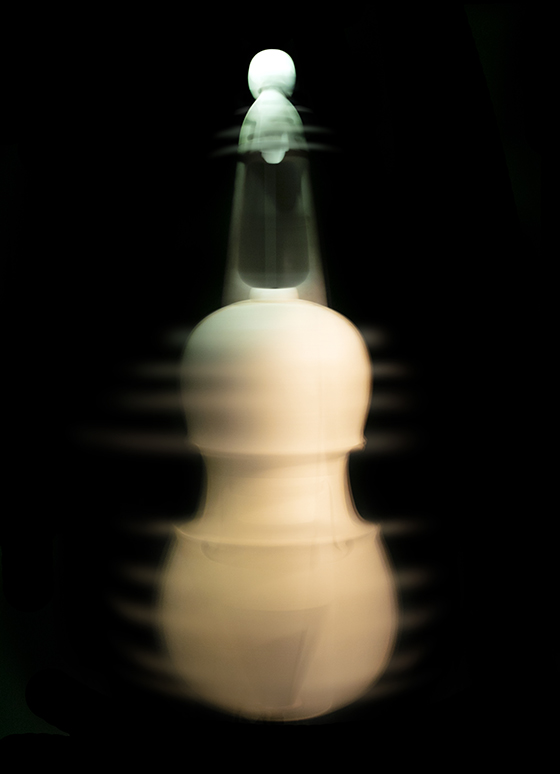
A N E M O C O R D E
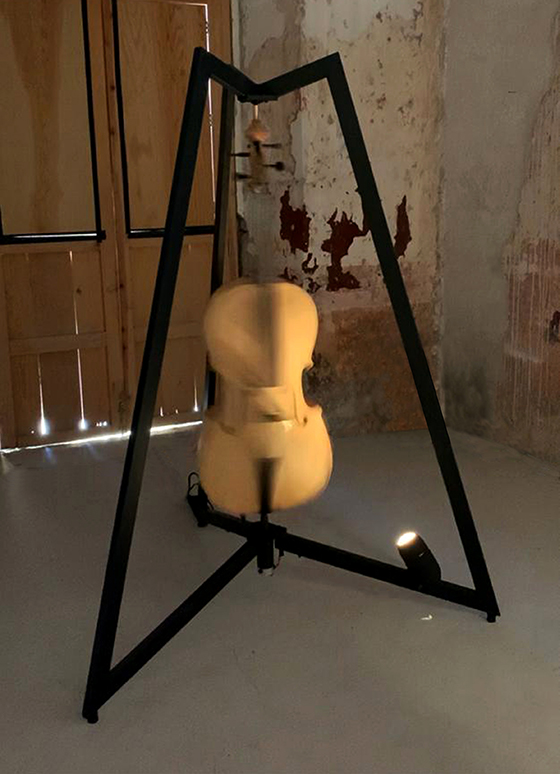
Mechanical sound installation. Cello, mechanical structure for the rotation of irregular objects with controlled speed, etching on cotton paper, and digital print with archival inks.
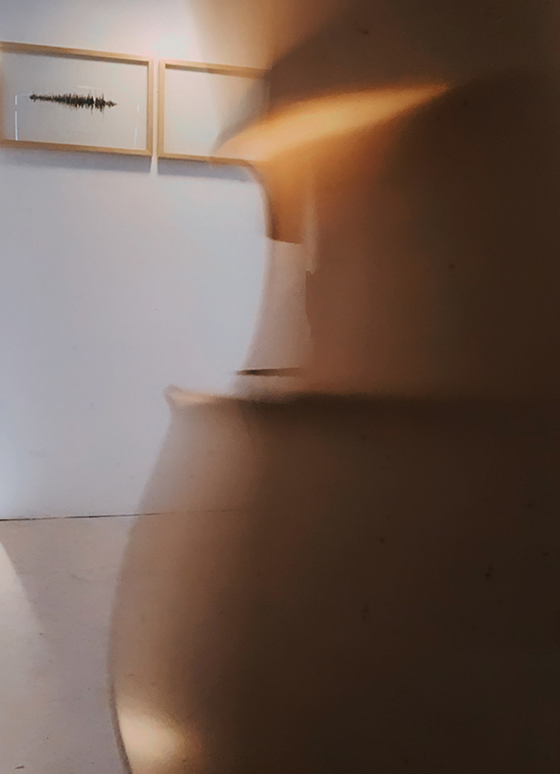
Extension of the possibilities of an instrument. The cello transcends its strict categorization to become a hybrid instrument: string and wind. In rotation, it loses its material presence and appears as a spectrum that manages to draw what looks like a sound wave, the graphic representation of sound, where the immaterial in turn becomes visible.
LA PREPONDERANCIA DE LO PEQUEÑO
“If all of humanity were to disappear, the world would regenerate back to the rich state of equilibrium that existed ten thousand years ago. If insects were to disappear, the environment would collapse into chaos.”
Edward O. Wilson
Not so much is said about them, about the loss of insect communities and how devastating this is for the vitality of ecosystems and their food chains. We are ignorant witnesses of the mass extinction of a variety of species as a consequence of human practices focused on economic growth, toxic industrial agriculture, and habitat destruction based on progress. The pieces arise from a collaborative work process, the result of the desire to not only witness but accompany the problems that arise. With specific questions based on observations and empirical processes, we explore possibilities through artifacts, imagination and fiction.
Ours is a sympoietic work process that allows exchanges from different ways, languages and perspectives, achieving as a result a group of pieces that interconnect, diverge and elaborate from a shared starting point. We want this process to lead us to conversations about how to live in a more respectful way, valuing all other species as much as humans.
Meanwhile, life asks with patient urgency to be cared for.
1- Sympoiesis is a term coined by Donna Haraway to define the action of ‘making with others,’ making in accompaniment.
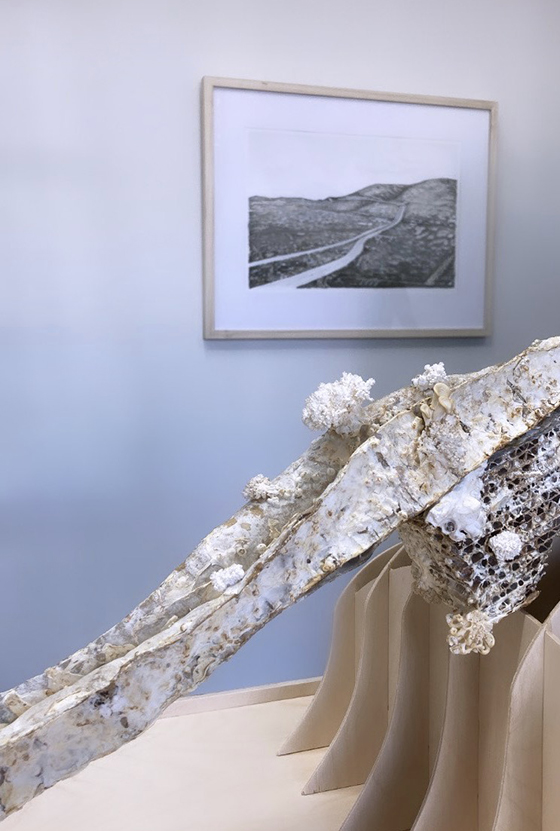
P.S.E.A It is the nomenclature to name a type of bridge made of mycelium, which is considered as a care space for the animal kingdom, with particular attention to the world of arthropods or insects. This bridge is proposed as a symbolic and material alternative to restore free and border-less transit, which was interrupted after the construction of a massive road distributor.
The mycelium forms the vegetative part of a fungus. It grows underground or inside tree trunks and is vital to ecosystems. It forms an invisible tangle of interconnected filaments like neural networks. As a construction material it represents a sustainable alternative that could shape the future from which architecture can evolve.
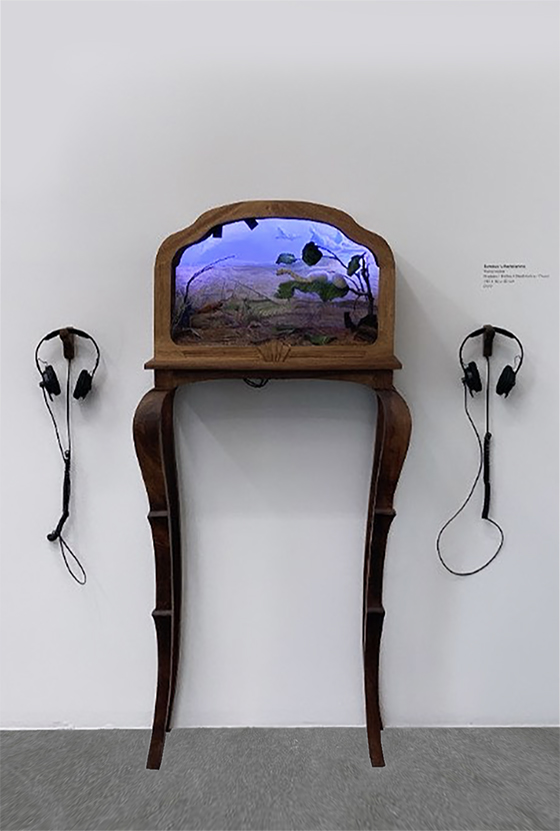
This small stage allows us to witness the encounter between two insects. Bombyx Mori, the silkworm, domesticated and exploited for more than 5,000 years, talks with Periplaneta Americana, the most common cockroach in Mexico, a perfectly evolved being that accompanies humans and surprises us with its resilience.
The dialogues are the result of interviews with both insects with an inter-species communicator that through telepathy allows people to contact other non human living beings.
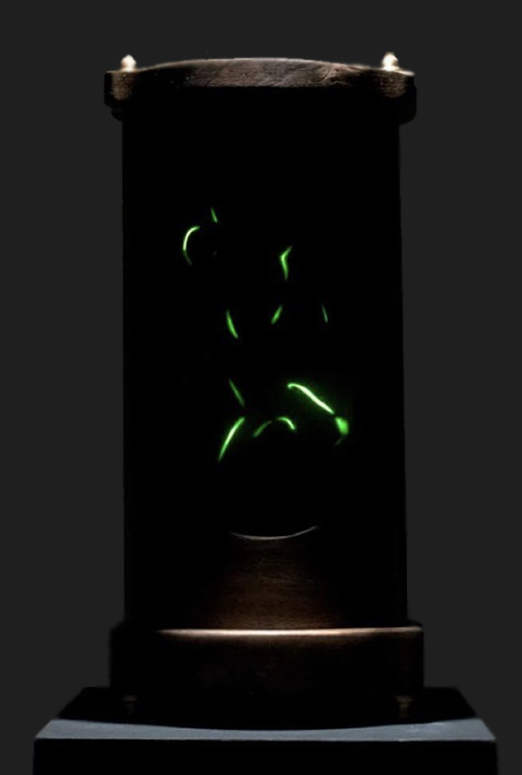
A lamp that catches the eye with the sparkles of an increasingly absent species. Electronic replicas of fireflies, preserved in captivity, to be able to appreciate them in places where they are no longer.
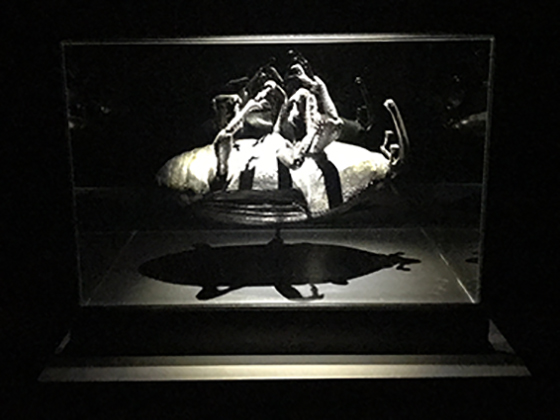
This piece, which integrates sculpture and sound art, offers a macroscopic look at a species of arthropod native to this region, the Scyphophorus Acupunctatus or Picudo.
The amplification of the physical and sound scale of this specimen allows us to get closer to their world through an immersive experience that encourages deep listening to their language, as well as the different signals that make it up and with which they communicate with each other.
D I L A O
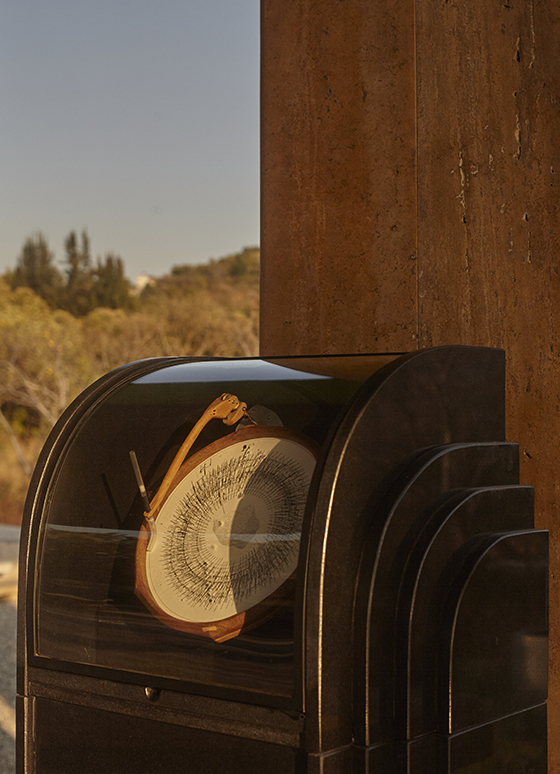
[sRcH] Samadhi Resonance Chamber
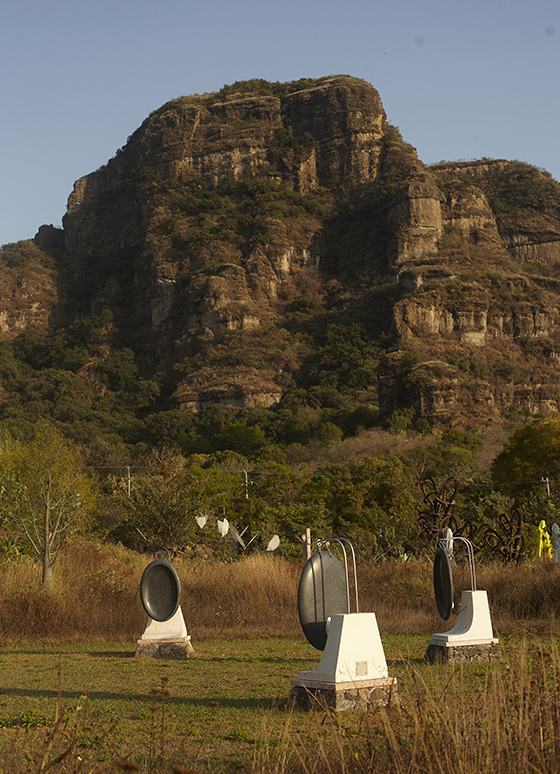
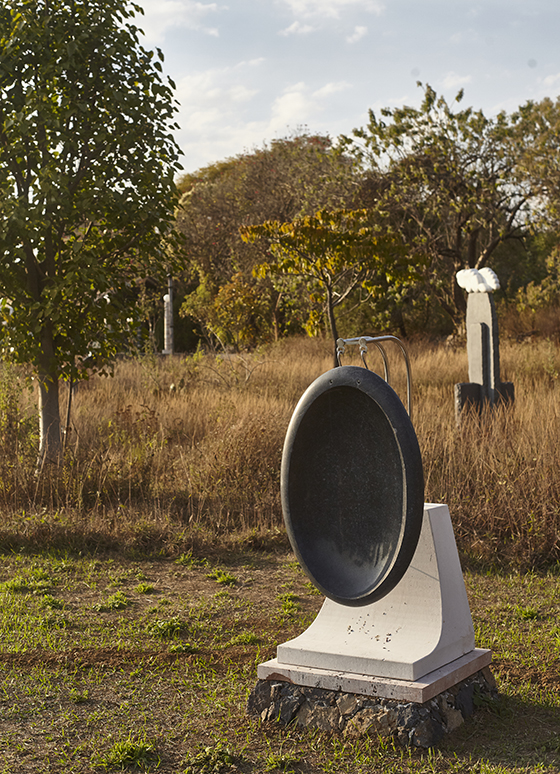
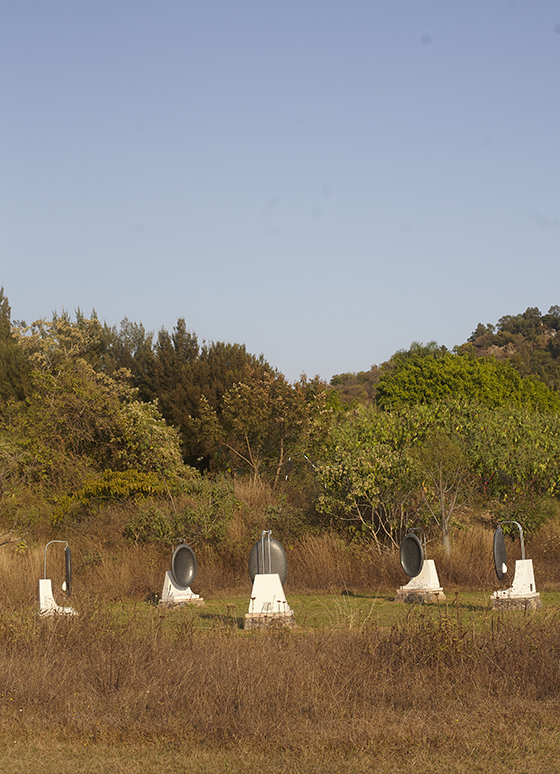
SRCH is a sound installation that creates a resonance field designed to induce a state of hyper-consciousness in the subject through a profound state of “no-mind.” The piece consists of four lithophones arranged in a circle; by generating specific frequencies (110 – 112 – 13.75 Hz) on the carved surfaces of the stones, complex echoes are produced within the radius of the installation.
It is well known that the physiological and mental effects of sound have been used in ancestral rituals to generate altered mental states, facilitating visionary experiences. These effects immerse us in a state where the body enters total relaxation while the mind remains alert—an initial stage of deep trance. Another physical sensation that may be experienced is the illusion that the sound is being generated from within the subject. Furthermore, these types of frequencies generate resonances within our energy points, helping to induce an experience of the sublimation of the self.
In ancient times, giant transducers and large concave granite basins were used to generate these resonances. When a stone vibrates at its resonant frequency, a vertical wave of compression and expansion is generated within it. What makes rocks unique is that they are piezoelectric, meaning they essentially convert pressure into electricity. Therefore, by inducing sound into a rock, it converts that sound into electromagnetic or electrogravitational energy.
It is upon these principles that we plan to base the research and the conceptual starting point of this piece: working with the resonance of rocks to generate sound fields that induce a state of hyper-consciousness.
PULSO
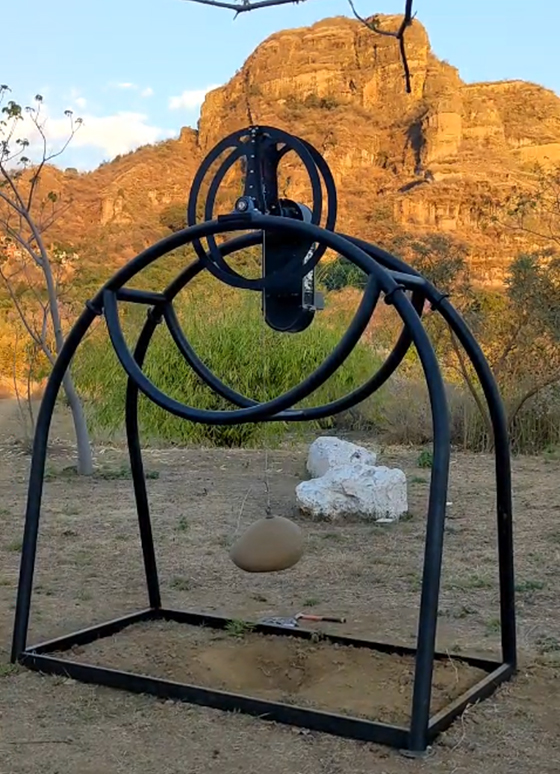
A mechanism composed of a 120 cm diameter steel plate disc that rotates mounted on a metal structure driven by a motor. Using a steel cable, the disc drags two stones and drops them consecutively to the floor from a height of one and a half meters at half-second intervals, generating a sound similar to a heartbeat.
In the early 1960s, Columbia University researcher Jack Oliver discovered that the Earth emits a pulse every 26 seconds. Subsequent research has determined that it originates from the depths of the Bight of Bonny in Guinea. It is not known exactly what causes this recurring microseism, but the phenomenon supports James Lovelock’s Gaia theory, which proposes that the Earth is a complex, self-regulating system.